
The Kitchen Remodel Timeline Nobody Talks About
You've been dreaming about a new kitchen for months — maybe years. You've saved up, browsed Pinterest boards, and finally decided it's time. But once you commit, the first question that hits is: how long is this actually going to take?
It's one of the most common questions we hear from homeowners in Fort Lauderdale, and for good reason. Your kitchen is the heart of your home. Losing access to it — even temporarily — affects your daily routine, your budget, and your stress levels. The good news is that when you understand the process from start to finish, the entire experience becomes far more manageable.
Here's a realistic, step-by-step breakdown of what to expect during a kitchen remodel so you can plan ahead and actually enjoy the transformation.
Phase 1: Design and Planning (2–4 Weeks)
Before a single cabinet is removed, the most important work happens on paper. This planning phase is where your vision takes shape and where smart decisions save you time and money down the road.
During this stage, you'll typically:
- Meet with your remodeling team to discuss your goals, lifestyle, and budget
- Review layout options and decide whether you're keeping the existing footprint or making structural changes
- Select materials — cabinetry, flooring, fixtures, appliances, and finishes
- Finalize the design with detailed drawings or 3D renderings
- Obtain any necessary permits from the city
In Fort Lauderdale, permit requirements can vary depending on the scope of work. If you're moving plumbing, electrical, or walls, permits are almost always required. A reputable contractor will handle this process for you, but it's worth asking about upfront so there are no surprises.
Phase 2: Demolition (2–5 Days)
This is the part that feels the most dramatic. Old cabinets come out, countertops are removed, flooring gets pulled up, and suddenly your kitchen looks like a construction zone. It can be unsettling, but it's also exciting — it means your new kitchen is officially underway.
A few things to prepare for during demolition:
- Set up a temporary kitchen. A folding table, microwave, coffee maker, and a cooler can go a long way. Many of our clients set up in their dining room or garage.
- Expect dust and noise. Your contractor should use plastic sheeting and dust barriers to contain the mess, but some disruption is unavoidable.
- Protect your belongings. Move valuables, electronics, and anything fragile away from the work area.
Phase 3: Rough-In Work (1–2 Weeks)
Once the old kitchen is cleared out, the behind-the-scenes work begins. This phase involves updating or rerouting the plumbing, electrical wiring, and sometimes gas lines to match your new layout.
If you're adding an island with a sink, moving the stove to a different wall, or upgrading to modern lighting, this is when those changes happen. It's not the most visually exciting stage, but it's critical. Proper rough-in work ensures everything functions safely and meets building codes.
Inspections are typically required at this point before the project can move forward. In South Florida, inspectors are generally responsive, but scheduling can occasionally add a day or two to the timeline.
Phase 4: Installation (2–4 Weeks)
Now the fun begins. This is where your kitchen starts to look like a kitchen again — and a much better one at that.
Installation typically follows this order:
- Drywall and patching — Any walls that were opened up during rough-in get closed, taped, and finished.
- Cabinetry — Custom or semi-custom cabinets are carefully installed and leveled. This is often the biggest visual milestone.
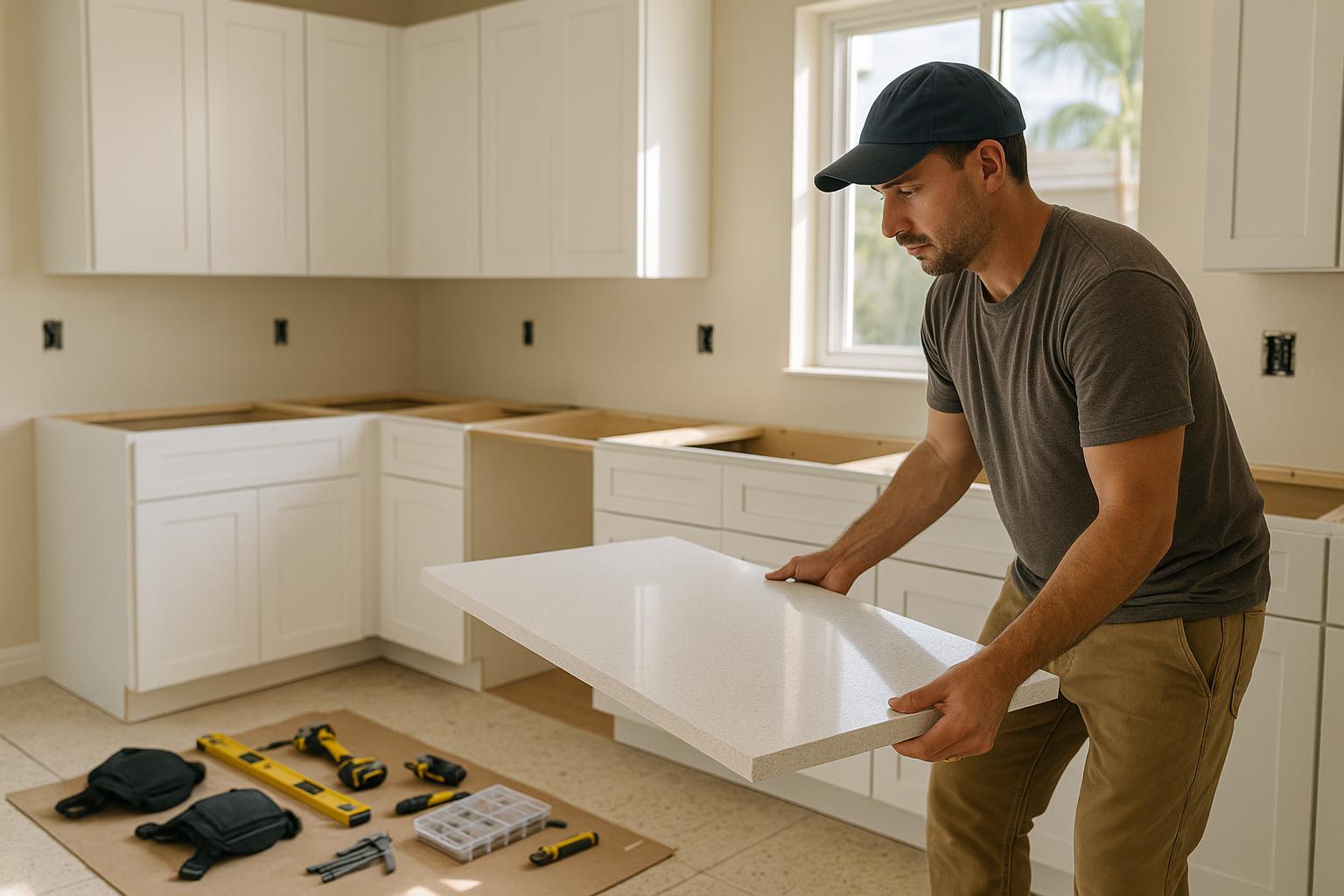
- Countertops — After cabinets are set, countertops are templated and fabricated. There's usually a short wait between templating and installation.
- Flooring — Depending on the material, flooring may be installed before or after cabinets. Your contractor will determine the best sequence for your project.
- Backsplash — Tile or other backsplash materials go in after the countertops are secured.
- Fixtures and appliances — Sinks, faucets, lighting, outlets, and appliances are connected and tested.
This phase is where patience pays off. Each trade needs to complete their work before the next one can begin, so there may be a day here or there where it seems like nothing is happening. Trust the process — it's moving forward.
Phase 5: Finishing Touches and Final Walkthrough (3–5 Days)
The last stretch includes painting, caulking, hardware installation, and all the small details that make the space feel complete. Your contractor should also do a thorough cleaning before the final walkthrough.
During the walkthrough, you'll go through the entire kitchen together, checking every detail:
- Do all doors and drawers open and close smoothly?
- Are the outlets and switches working properly?
- Is the plumbing leak-free?
- Are there any scratches, gaps, or touch-ups needed?
This is your opportunity to flag anything that needs attention before the project is officially wrapped up. A good remodeling company welcomes this step — it's part of delivering a finished product you're truly happy with.
So How Long Does a Kitchen Remodel Really Take?
For a typical full kitchen remodel in Fort Lauderdale, you're looking at roughly 6 to 12 weeks from demolition to completion. The total timeline depends on the complexity of the project, material lead times, and whether any structural changes are involved.
Smaller updates — like replacing countertops and repainting cabinets — can be completed in as little as two to three weeks. Larger renovations that involve layout changes, custom cabinetry, and new flooring naturally take longer.
The biggest factor in staying on schedule? Planning. When materials are selected early, decisions are made before demolition begins, and your contractor has a clear scope of work, the project flows smoothly.
Tips to Keep Your Remodel on Track
- Make selections early. Backordered tile or delayed appliance deliveries are the most common causes of timeline setbacks.
- Designate a single decision-maker. If multiple people are involved, agree on choices before the project starts to avoid mid-project changes.
- Communicate openly with your contractor. Ask questions, voice concerns, and stay in the loop. Good communication prevents most problems.
- Build in a buffer. Even well-planned projects can hit minor delays. Give yourself an extra week or two of mental cushion.
Ready to Start Planning Your Kitchen Remodel?
At Mantle Home Renovation, we guide Fort Lauderdale homeowners through every phase of the kitchen remodeling process — from the first design consultation to the final walkthrough. We believe that when you know what to expect, the experience is not just manageable but genuinely enjoyable.
If you're considering a kitchen remodel in Fort Lauderdale, Hollywood, Pompano Beach, or the surrounding areas, we'd love to talk through your project and help you understand exactly what's involved. Reach out to schedule a free consultation and take the first step toward the kitchen you've been imagining.