
Why the Order of Your Remodel Matters More Than You Think
When homeowners in Fort Lauderdale decide to take on a full home remodel, one of the most common questions we hear at Mantle Home Renovation is: Where do we even start? It's a great question — and the answer can mean the difference between a smooth, on-budget project and a frustrating cycle of rework and unexpected costs.
Renovating your home isn't just about picking beautiful finishes and fixtures. The sequence in which work gets done has a direct impact on your timeline, your budget, and the final quality of every room. Doing things out of order can lead to damaged new surfaces, wasted materials, and trades stepping on each other's toes.
Whether you're updating a single kitchen or transforming your entire home, here's the proven order that professional remodelers follow — and why each step matters.
Step 1: Planning, Design, and Permits
Before a single wall is touched, the most important work happens on paper. This phase includes:
- Setting your budget and priorities. Know what matters most to you — a chef's kitchen, a spa-like bathroom, new flooring throughout — and allocate funds accordingly.
- Finalizing your design. Work with your remodeling team to lock in layouts, materials, and finishes. Changes made during construction are exponentially more expensive than changes made on a plan.
- Pulling permits. Fort Lauderdale and surrounding areas like Hollywood, Pompano Beach, and Wilton Manors all have specific building codes and permit requirements. Skipping this step can result in fines, failed inspections, and serious headaches when you sell your home.
A reputable remodeling company handles permits and inspections as part of the process, so you don't have to navigate municipal offices on your own.
Step 2: Demolition and Structural Work
Once plans are finalized and permits are in hand, demolition begins. This is the messy but exciting phase where your old space starts to disappear. During this stage, any structural changes are also made — removing or adding walls, reinforcing beams, or reconfiguring room layouts.
This is also when you'll discover any hidden surprises behind walls, such as outdated wiring, water damage, or plumbing that doesn't meet current code. Addressing these issues now prevents major problems down the road.
Step 3: Rough-In Mechanical Systems
With the structure in place, it's time for the behind-the-scenes systems that make your home function:
- Electrical: New wiring, outlets, and panel upgrades.
- Plumbing: Rerouting pipes for new kitchen or bathroom layouts.
- HVAC: Adjusting ductwork or adding new vents to accommodate the new floor plan.
This work all happens before walls are closed up, which is why it must come before drywall and finishing. In South Florida's humid climate, this is also the ideal time to address any moisture barriers or insulation upgrades that will protect your investment for years to come.
Step 4: Drywall, Mudding, and Priming
After mechanical inspections pass, drywall goes up. Seams are taped, mudded, and sanded smooth. A coat of primer prepares the surfaces for paint. This step transforms your project from a construction zone into something that actually looks like a home again.
It's tempting to rush through this phase, but patience here pays off. Properly finished drywall is the foundation for flawless paint and a polished final result.
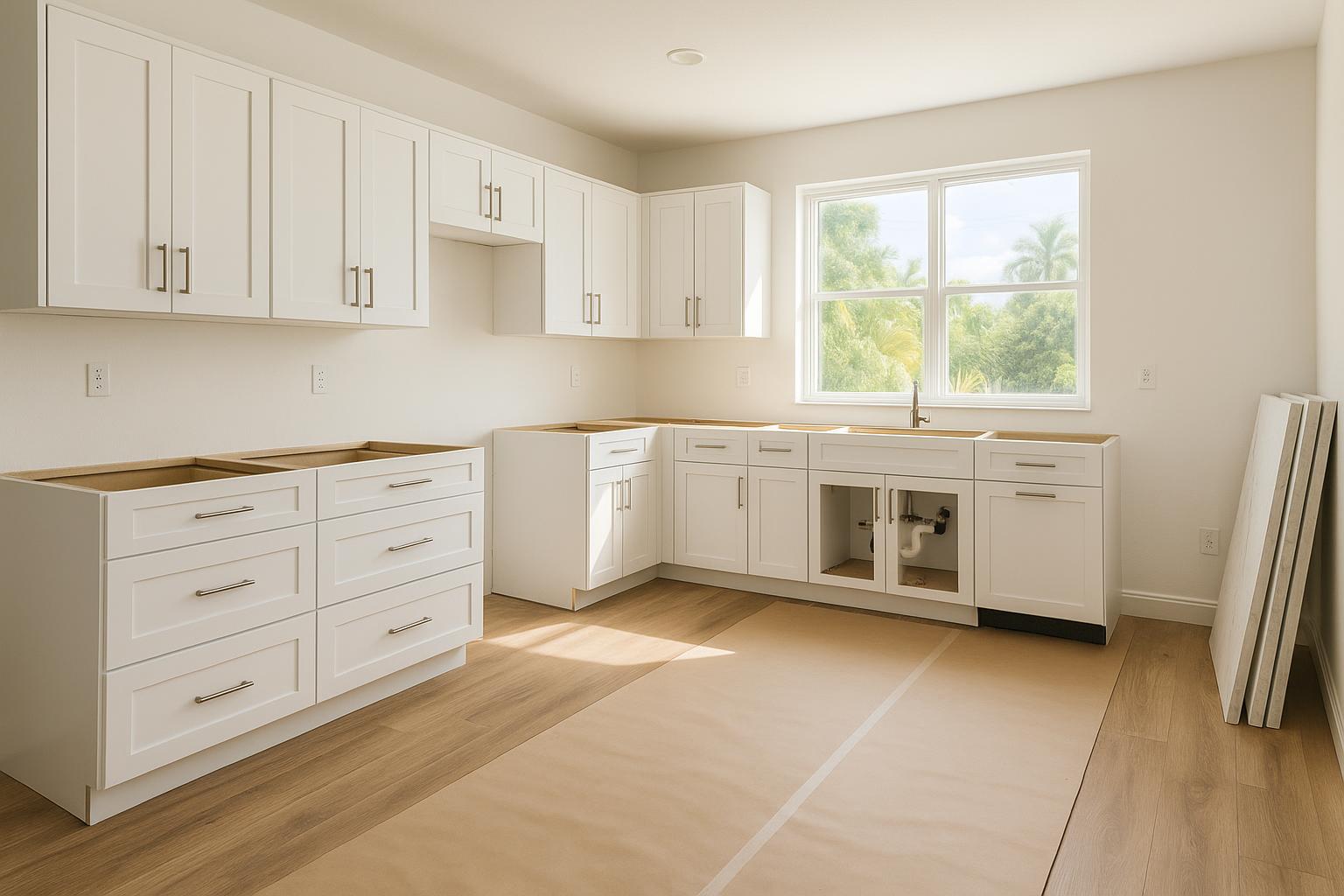
Step 5: Custom Cabinetry and Built-Ins
Cabinets are installed before countertops, backsplashes, and most finish work. Whether you're going with custom cabinetry for your kitchen or adding built-in storage to a bathroom, getting cabinets in place first allows countertop fabricators to take precise measurements for a perfect fit.
This is one of the stages where the transformation really starts to feel real. You can see the layout come to life and begin to imagine how the finished space will function day-to-day.
Step 6: Countertops and Tile Work
With cabinets set, countertops are templated, fabricated, and installed. Backsplash tile, shower surrounds, and any other tile work also happen during this phase. Doing tile work now — after cabinets but before final painting — means any minor wall touch-ups from installation can be addressed in the next step.
Step 7: Interior Painting and Finishing
Now the space gets its personality. Interior painting happens after the heavy installation work is complete, which minimizes the risk of scuffs, dings, and dust settling on fresh paint. This phase also includes:
- Installing trim, baseboards, and crown molding
- Door and hardware installation
- Final caulking and touch-ups
Choosing the right paint colors and finishes can dramatically change the feel of a room. In Fort Lauderdale homes, we often see homeowners leaning toward light, airy palettes that complement the natural sunlight South Florida is known for.
Step 8: Flooring Installation
There's some debate among contractors about when to install flooring. In many full remodels, flooring goes in after painting to avoid paint drips and heavy foot traffic on new surfaces. However, in some cases — particularly with hardwood — floors may be installed earlier and protected during subsequent work.
Your remodeling team should advise you based on the specific materials you've chosen. Luxury vinyl plank, porcelain tile, and engineered hardwood are all popular choices for Fort Lauderdale homes because they handle humidity and heavy use exceptionally well.
Step 9: Fixtures, Appliances, and Final Connections
The finish line is in sight. During this phase, everything gets connected and installed:
- Light fixtures and ceiling fans
- Plumbing fixtures — faucets, sinks, toilets, showerheads
- Kitchen appliances
- Outlet covers and switch plates
This is the stage where all those selections you made during the design phase finally come together in your space.
Step 10: Final Walkthrough and Punch List
A professional remodeling company will walk through every detail with you before considering the project complete. This final walkthrough is your opportunity to flag anything that needs adjustment — a cabinet door that doesn't close perfectly, a paint touch-up in a corner, or a fixture that isn't quite aligned.
At Mantle Home Renovation, we don't consider a project finished until our clients are completely satisfied. That final walkthrough is one of the most important steps in the entire process.
Avoid the Most Common Remodeling Mistake
The biggest mistake homeowners make isn't choosing the wrong tile or paint color — it's starting work before the plan is truly complete. Rushing into demolition without finalized designs, material selections, and a clear scope of work almost always leads to delays and budget overruns.
If you're considering a kitchen remodel, bathroom renovation, or a larger transformation of your home in Fort Lauderdale or nearby communities like Oakland Park and Deerfield Beach, the best first step is a conversation with an experienced remodeling team. A solid plan and the right sequence will save you time, money, and stress.
Ready to start planning your remodel the right way? Contact Mantle Home Renovation today for a free consultation, and let's map out the perfect plan for your home.